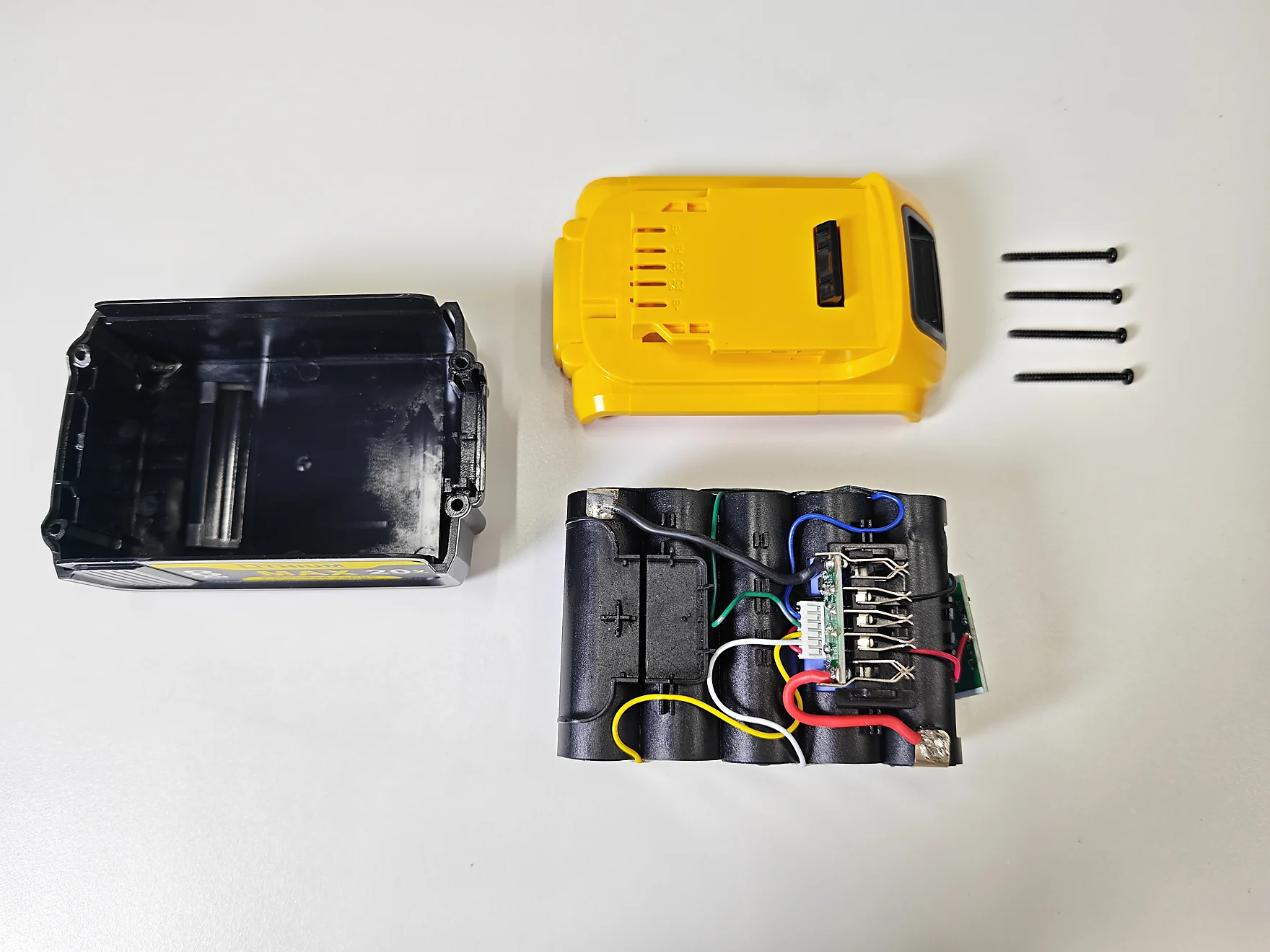
Start with the complete assembly
A replacement battery pack is an integrated product, not simply a group of cylindrical cells. The mechanical enclosure, terminals, connecting conductors and management electronics all influence whether a proposed pack is appropriate for its application.
The sample photographs in this guide show visible construction details. They are reference examples, not a circuit specification, a tested performance claim or proof that the same layout is used in every VOLTBATT project.
- Record the target equipment and battery part number.
- Collect photographs of the front, underside, connector and housing.
- Ask for the electrical and mechanical drawings used for review.
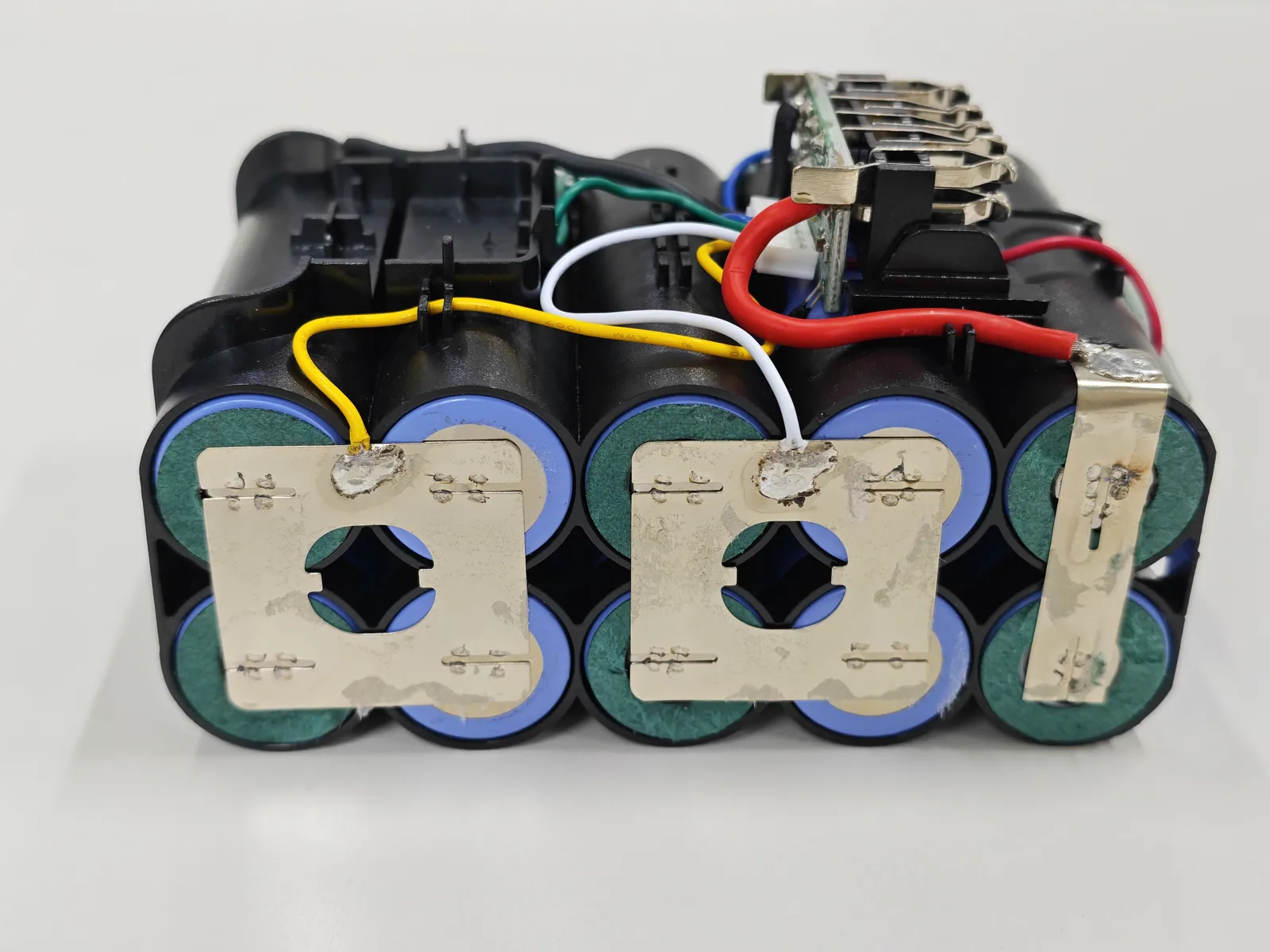
Cell arrangement and interconnects
Cell format, series and parallel arrangement, connections, insulation and space for thermal management must be considered together. A visually similar assembly can have a different electrical configuration or current limit.
An importer should request the nominal voltage, required usable capacity, load profile, cell specifications and evaluation criteria before choosing a layout. Do not infer an exact cell type, rating or weld quality from appearance alone.
- How is the target voltage derived?
- What continuous and short-duration loads must be supported?
- How will interconnect integrity be checked?
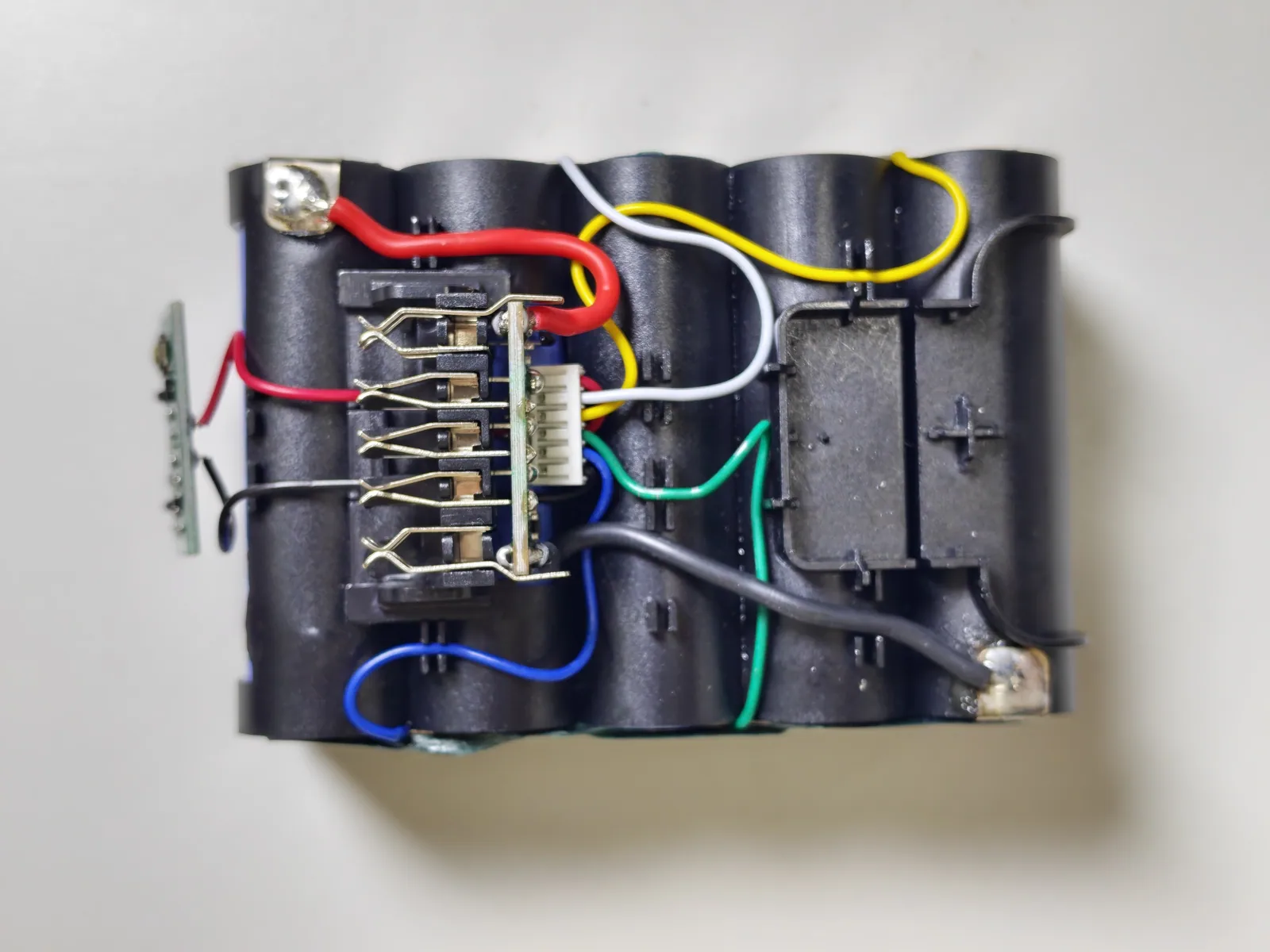
BMS, terminals and wiring
The battery management electronics must be selected for the actual application. Depending on the product, questions may include overcharge and overdischarge protection, temperature sensing, current limits and interactions with external devices.
Terminals and harnesses need defined pinouts, insulation and retention. A housing that appears to fit will not necessarily provide suitable electrical or communication compatibility.
- Ask for a connector map or pinout definition.
- Clarify which sensing and communication functions are required.
- Agree on the validation record expected for the proposed design.
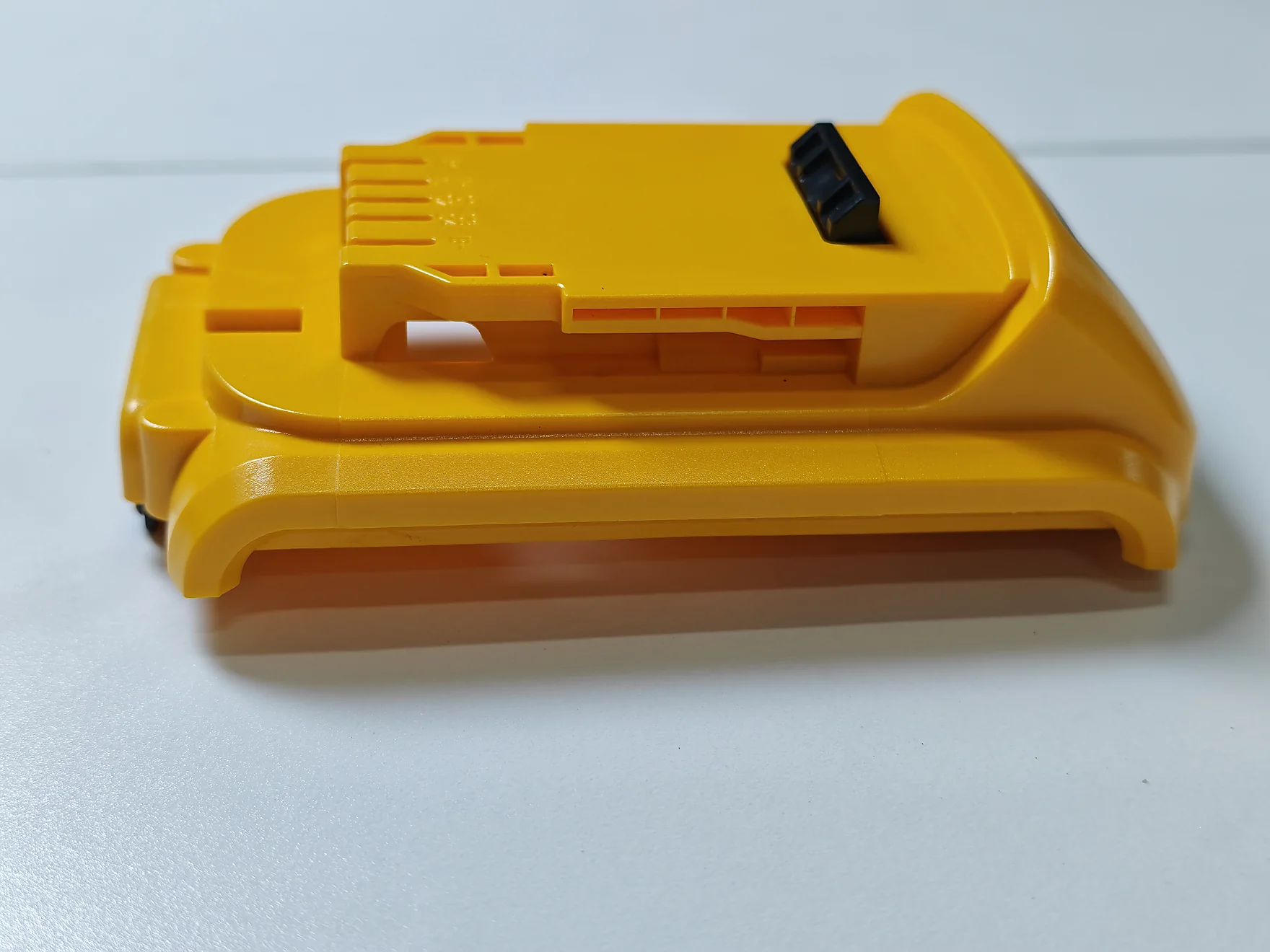
Housing fit and documentation
A dependable sourcing discussion includes housing geometry, the latch, slide guides, installation clearances and label information. Tool and charger reference samples are useful when dimensional drawings are incomplete.
For an OEM/ODM request, provide target markets and the documentary requirements that may apply. Requirements vary with product design, battery configuration and transport route; evidence needs to be reviewed case by case.
- Tool/battery/charger identification
- Envelope dimensions and locking mechanism
- Electrical data and acceptance criteria
- Market-specific documentation and packaging needs
A practical handoff
Organize the findings into a brief: desired use, exact compatible model scope, constraints, sample plan, expected volumes and documentation. This converts a general “replacement battery” request into a project that can be evaluated.
Trace the path from cells to the external connector
For an initial technical review, it helps to trace the design visually in the same order a current path and control signal would be documented: individual cell identification, physical grouping, joining conductors, sensing or protection board, wires, terminal assembly and enclosure features. A photograph showing these parts is helpful as an orientation aid but cannot prove which pins perform which functions. Ask the designer for a configuration diagram linked to an identifiable sample revision. Changes in cells, wiring or connector placement should be logged so the inspected image still corresponds to the quoted configuration.
Practical next step: make this a written review item with a named drawing or sample revision, evidence request and responsible reviewer. The same checklist can then be used consistently when comparing suppliers or evaluating a revised prototype.
Compare real photographs with illustrative drawings
An exploded view can clarify assembly sequence and the relationship between supports, circuit boards and housing parts. However, illustrations sometimes simplify wiring, omit fasteners or combine features that do not appear together in a production unit. Use real photographs to identify visible details and controlled drawings to confirm the actual specification. During a supplier review, mark each item as visible, documented or still to verify; that simple distinction avoids turning an attractive engineering image into a claim about tested performance.
Practical next step: make this a written review item with a named drawing or sample revision, evidence request and responsible reviewer. The same checklist can then be used consistently when comparing suppliers or evaluating a revised prototype.
Buyer worksheet: evidence to collect
Use these fields before asking for a firm technical approval or quotation. A missing field should be flagged for follow-up rather than assumed to match an earlier model.
- Reference tool, battery and charger models
- Cell configuration drawing
- Protection board description
- Wiring and terminal map
- Housing and latch dimensions
- Sample revision and verification report
Attach the supplier supporting record and date to each field. A sample photo or video can show visible features but not certify protective performance, exact compatibility, factory ownership or transport eligibility.
A practical buyer decision scenario
Consider a buyer presented with a photograph of an opened pack and a quotation promising the same external shape as the requested reference. The image helps identify possible cells, conductor paths and a terminal carrier. It cannot establish whether the offered pack uses the same protection logic, wire routing or contact assignment. Before approving the purchase, the buyer should request matching revision-controlled assembly and interface documents, then connect those records to a sample evaluation plan. This is a better next step than asking for a second photograph from a slightly different angle.
Review record
For each item below, name the evidence source and keep unresolved findings separate from confirmed results. Copy the rows into the project review file rather than relying on memory or a sales chat.
| Information to verify | Source and revision | Decision status |
|---|---|---|
| Reference tool, battery and charger models | Document / revision / responsible reviewer: __________ | Open · Confirmed · Not applicable |
| Cell configuration drawing | Document / revision / responsible reviewer: __________ | Open · Confirmed · Not applicable |
| Protection board description | Document / revision / responsible reviewer: __________ | Open · Confirmed · Not applicable |
| Wiring and terminal map | Document / revision / responsible reviewer: __________ | Open · Confirmed · Not applicable |
| Housing and latch dimensions | Document / revision / responsible reviewer: __________ | Open · Confirmed · Not applicable |
| Sample revision and verification report | Document / revision / responsible reviewer: __________ | Open · Confirmed · Not applicable |
Once the buyer and supplier have agreed the open questions, the next step is a revision-specific sample or document review. No illustrative image in this article should be treated as a passed test.
Frequently asked buyer questions
Can a teardown photo reveal the exact battery specification?
No. The image can show visible parts, but cell models, circuit logic and acceptance results require model-specific documents.
What is the best first document to request?
Ask for a revision-controlled assembly overview with identifiable cell, terminal and connector references.
Evidence and verification
Use current product datasheets, approved interface drawings, exact model references and revision-controlled test records for project-specific claims. If transport obligations, certification or market access is involved, the responsible specialist must verify the current requirements for the exact product and route. These illustrative images do not replace that review.
Documentation matters: These images and short demonstrations are illustrative. Compatibility, production capability, protection performance, certification and shipping eligibility must be supported by model-specific data and applicable records.